


40-42 Hatton
Garden London
EC1N 8EB
PSG’s 2026 win over Arsenal in the Champions League Final led to chaos on the streets of Paris, spilling into hundreds of arrests across France, echoing the year prior, which saw similar frenzy after the club’s first win of the same title.
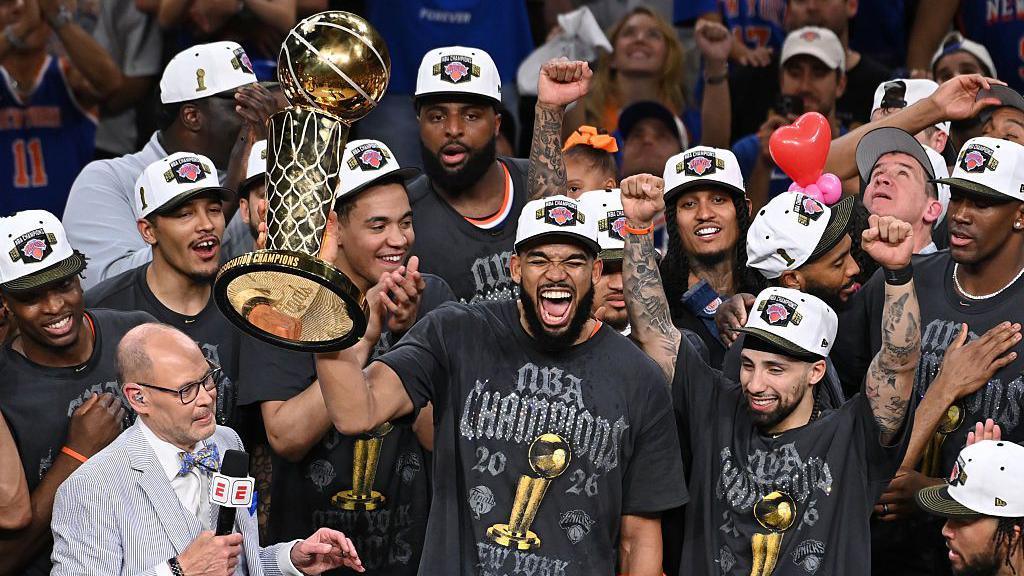
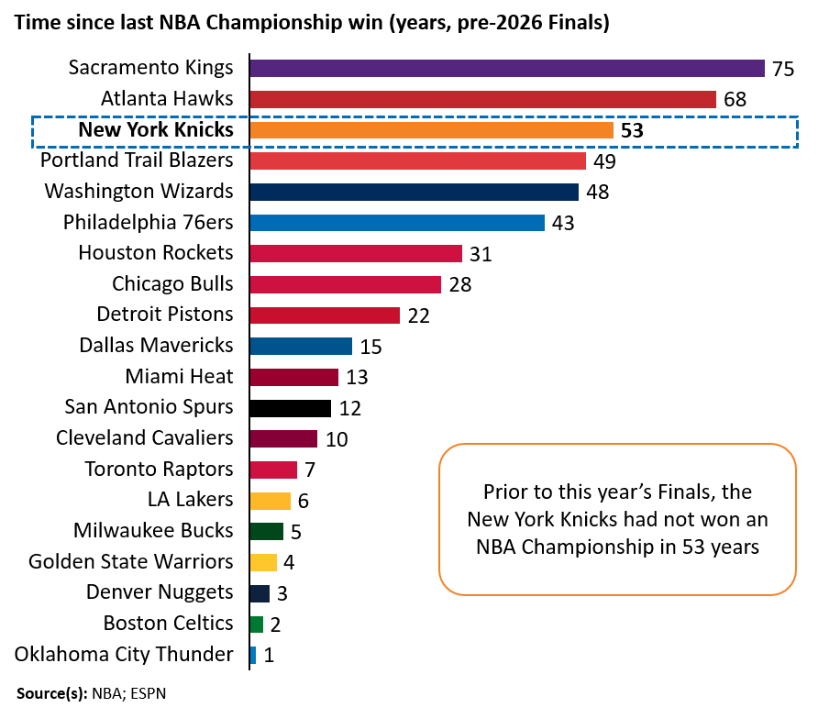
A fortnight later, in the NBA, the streets of New York witnessed the wild aftermath of the Knicks’ historic Finals win, ending a 53-year drought since their last championship, the third longest active drought of any NBA franchise that has previously won a title.
The passion – and sometimes carnage – of fans in sport has never been in doubt. What should interest investors and operators alike is that these emotional peaks are predictable, recurring, and often uncaptured.
To a large extent, the heights of fan passion can be forecast well in advance: finals, local derbies, historical rivalries, title deciders, and so on. Anything where much is at stake, and especially when anticipation has had a long time to build, sometimes even decades.
Some peaks are recurring and can be planned for – they are on the calendar every season. Others, like the end of a 53-year drought, are rare and unrepeatable; these cannot be scheduled, only be prepared to capitalise when they arrive.
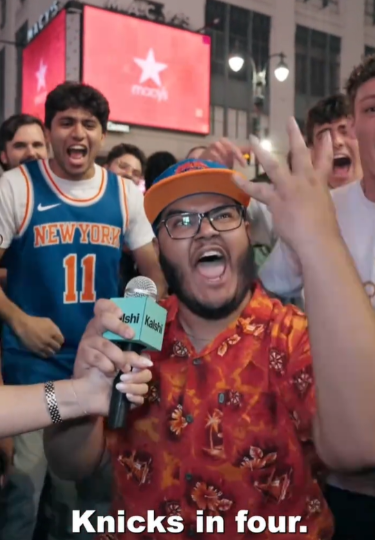
For operators – the clubs, leagues, and venues who already own the fans and the fixtures – recurring moments of peak emotion can and should be treated like a deliberately timed product launch. Pre-positioned commerce and marketing promotions during the build-up are both effective. Social algorithms also reward content that ties into trending events, so timely “in the moment” content tends to deliver far greater ROI, as prediction market Kalshi discovered with its viral 15-second clip of a Knicks fan after Game 1.
Elsewhere, there is an opportunity for investors and founders in the tooling that supports this fandom, whether planned or unplanned. Live-event safety and crowd management are increasingly demanded by stadium owners and event organisers. Ticketing and rev-ops platforms capable of dealing with demand surges are also seeing strong growth – see our investments in mass-participation platform Let’s Do This and ticketing start-up Jump.
Kalshi’s reactive marketing during the 2026 NBA Finals, leading to millions of views across social platforms. (Sources: TikTok; Washington Post)
Within these high-engagement events, it is increasingly individual players, not institutions, driving attention. The Knicks’ title hinged on Finals-MVP Jalen Brunson’s 45-point Game 5.
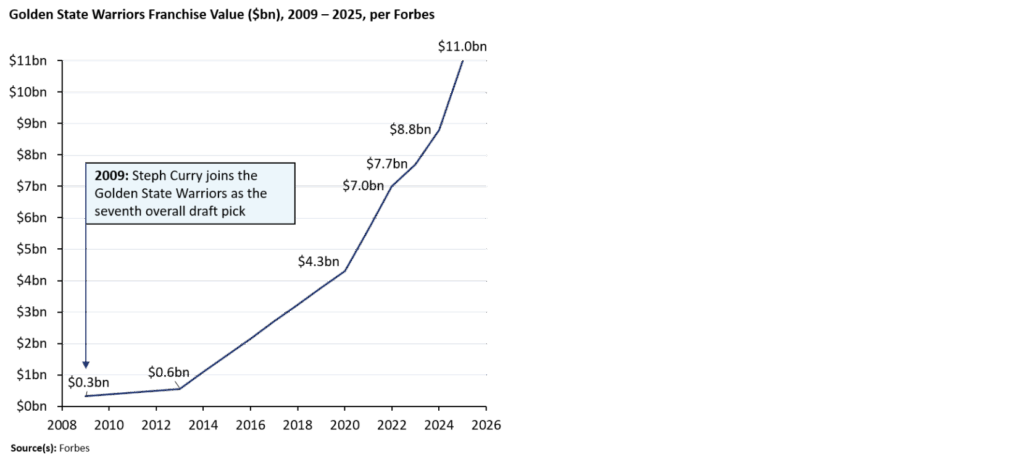
Individual stars, if big enough, can have a direct impact on enterprise value. Forbes credits Steph Curry’s brand equity and global appeal as a core driver of the Golden State Warriors’ rise from $315m in 2009 to $11bn in 2025 – alongside four titles and a new arena.
Value is unbundling from teams to individuals, for example through through athlete equity stakes, through athletes and creators as core product distribution (the go-to-market playbook behind brands like Whoop and Gymshark), and creator-led formats built on personal followings rather than that of a team or league.
The question of “who owns the audience?” is increasingly the athlete, not the badge. Tech that helps athletes monetise, manage, and retain their fans is an attractive current category.
PSG’s Champions League win drew around 20,000 people onto the Champs-Elysées. Yet from the club’s perspective, that night converts into almost no lasting fan relationship. The next day, the opportunity to capture that relationship is lost. For founders and investors, the winners will be the platforms that can turn the fan passion from one event into an ongoing, monetisable relationship.
Sports teams have the luxury of intensely loyal customer bases relative to other consumer brands, and yet customer data is sparse, even at the world’s most prominent clubs. On signing its 2022 Spotify sponsorship deal, FC Barcelona revealed that it held details on just 1% of their claimed 350 million fans. For operators, the prize is in capturing first-party data, especially at moments of peak emotion, and extending it past the final whistle.
Fan intensity is one of the few assets in sport that cannot be manufactured. Its recurring, predictable nature is what makes it valuable from an investment perspective: the peaks are on the calendar, the demand is virtually ever-present, and the tools to capture the value from it remain few and far between.
For operators, the job is to plan for these moments and deliver on time when they arrive. For founders and investors, the job is to build and fund the infrastructure that stops the value from disappearing overnight.

Ready to take your sports start-up to the next level? Let's collaborate and redefine the game together.
PSG’s 2026 win over Arsenal in the Champions League Final led to chaos on the streets of Paris, spilling into hundreds of arrests across France, echoing the year prior, which saw similar frenzy after the club’s first win of the same title.
A fortnight later, in the NBA, the streets of New York witnessed the wild aftermath of the Knicks’ historic Finals win, ending a 53-year drought since their last championship, the third longest active drought of any NBA franchise that has previously won a title.
The passion – and sometimes carnage – of fans in sport has never been in doubt. What should interest investors and operators alike is that these emotional peaks are predictable, recurring, and often uncaptured.
To a large extent, the heights of fan passion can be forecast well in advance: finals, local derbies, historical rivalries, title deciders, and so on. Anything where much is at stake, and especially when anticipation has had a long time to build, sometimes even decades.
Some peaks are recurring and can be planned for – they are on the calendar every season. Others, like the end of a 53-year drought, are rare and unrepeatable; these cannot be scheduled, only be prepared to capitalise when they arrive.
For operators – the clubs, leagues, and venues who already own the fans and the fixtures – recurring moments of peak emotion can and should be treated like a deliberately timed product launch. Pre-positioned commerce and marketing promotions during the build-up are both effective. Social algorithms also reward content that ties into trending events, so timely “in the moment” content tends to deliver far greater ROI, as prediction market Kalshi discovered with its viral 15-second clip of a Knicks fan after Game 1.
Elsewhere, there is an opportunity for investors and founders in the tooling that supports this fandom, whether planned or unplanned. Live-event safety and crowd management are increasingly demanded by stadium owners and event organisers. Ticketing and rev-ops platforms capable of dealing with demand surges are also seeing strong growth – see our investments in mass-participation platform Let’s Do This and ticketing start-up Jump.
Kalshi’s reactive marketing during the 2026 NBA Finals, leading to millions of views across social platforms. (Sources: TikTok; Washington Post)
Within these high-engagement events, it is increasingly individual players, not institutions, driving attention. The Knicks’ title hinged on Finals-MVP Jalen Brunson’s 45-point Game 5.
Individual stars, if big enough, can have a direct impact on enterprise value. Forbes credits Steph Curry’s brand equity and global appeal as a core driver of the Golden State Warriors’ rise from $315m in 2009 to $11bn in 2025 – alongside four titles and a new arena.
Value is unbundling from teams to individuals, for example through through athlete equity stakes, through athletes and creators as core product distribution (the go-to-market playbook behind brands like Whoop and Gymshark), and creator-led formats built on personal followings rather than that of a team or league.
The question of “who owns the audience?” is increasingly the athlete, not the badge. Tech that helps athletes monetise, manage, and retain their fans is an attractive current category.
PSG’s Champions League win drew around 20,000 people onto the Champs-Elysées. Yet from the club’s perspective, that night converts into almost no lasting fan relationship. The next day, the opportunity to capture that relationship is lost. For founders and investors, the winners will be the platforms that can turn the fan passion from one event into an ongoing, monetisable relationship.
Sports teams have the luxury of intensely loyal customer bases relative to other consumer brands, and yet customer data is sparse, even at the world’s most prominent clubs. On signing its 2022 Spotify sponsorship deal, FC Barcelona revealed that it held details on just 1% of their claimed 350 million fans. For operators, the prize is in capturing first-party data, especially at moments of peak emotion, and extending it past the final whistle.
Fan intensity is one of the few assets in sport that cannot be manufactured. Its recurring, predictable nature is what makes it valuable from an investment perspective: the peaks are on the calendar, the demand is virtually ever-present, and the tools to capture the value from it remain few and far between.
For operators, the job is to plan for these moments and deliver on time when they arrive. For founders and investors, the job is to build and fund the infrastructure that stops the value from disappearing overnight.
Accelerate Ventures
Accelerate Ventures 40-42 Hatton Garden London EC1N 8EB
