


40-42 Hatton
Garden London
EC1N 8EB
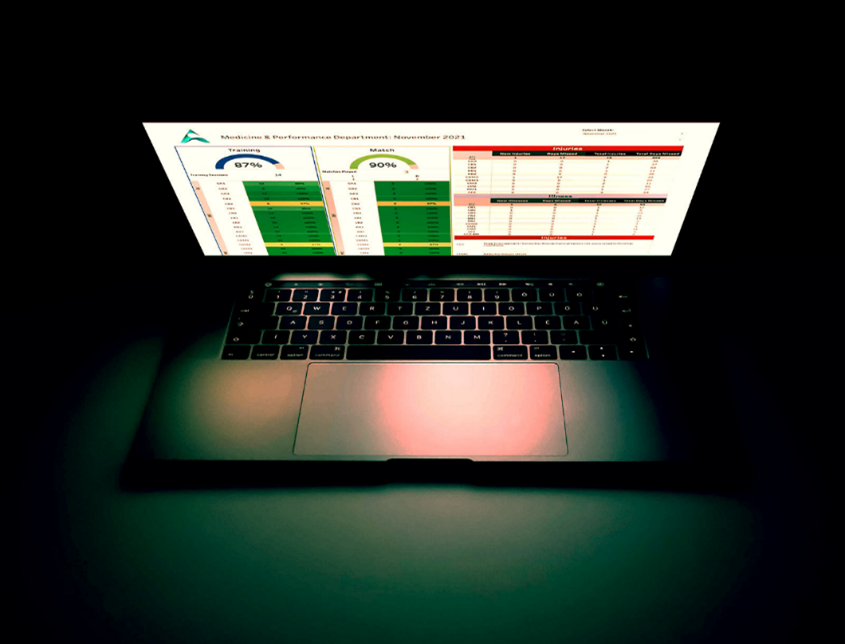
In the 2023–24 season, clubs across Europe’s top five men’s football leagues collectively recorded €732 million in player-salary losses due to injury. The ROI case on salary alone writes itself. If a single year-long injury to a £15m-per-year player is avoided, a £200,000 annual software subscription pays back 75x. This is one of the strongest ROI propositions in all of enterprise software.
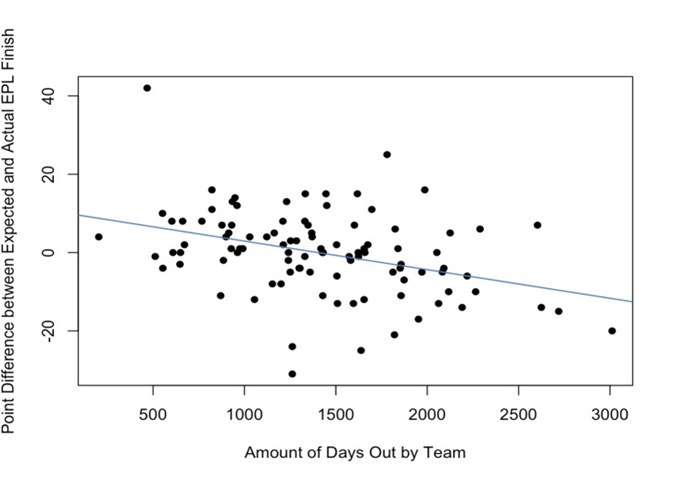
Figure 1: The relationship between days out due to injuries and the difference between expected and actual points by the end of the season. Based on data from seasons 2012–2013 to 2016–2017. EPL, English Premier League. Source
Additionally, injuries affect performance. The average Premier League club lost approximately £45 million in performance decrements in a single season, and every 271 player-days lost to injury costs a team one place in the final league table. In England, the difference between a one place finish can be worth tens or hundreds of millions in broadcast revenue alone.
The opportunity is enormous, but three structural challenges explain why injuries remain an issue.
1. The science is multifactorial. Musculoskeletal injuries emerge from the interaction of biomechanics, workload, fatigue, sleep, nutrition, genetics, psychology etc.; no single variable is reliably predictive.
2. The data problem is real. There is a small N of professional athletes by sport. Even with perfect data collection, the sample size for any specific injury type is tiny. Doing this best means aggregating across leagues and sports, which introduces its own confounders.
3. The addressable market is smaller than it looks. When you drill into the customer base for an AI-powered injury platform targeting elite professional teams, you find perhaps 300–500 clubs globally who can afford enterprise software at meaningful price points.
Over the past five years, a generation of companies has emerged attacking injury prevention from different angles. We see five broad categories.
1. Biomarker Analytics. The oldest and arguably most validated approach profiles athletes across 100+ blood biomarkers to identify physiological stress states that precede injury. The challenge is frequency: blood testing cannot be done daily. The companies that crack continuous biomonitoring will have a significant advantage.
2. Movement & Biomechanics. The traditional gold standard was lab-based motion capture: rooms full of cameras and hour-long sessions. Several startups now use smartphones and cloud-based computer vision to produce models at a fraction of the cost.
3. Wearable Sensors. Startups have built AI-powered insoles tracking gait, ground reaction forces, and bilateral asymmetry in real time. Gait asymmetry is one of the earliest warning signals for lower-body soft-tissue injuries. Sensor networks are also being built directly into compression apparel, measuring real-time joint torques and 3D motion.
4. Advanced Imaging & Diagnostics. MRI scans can be converted into detailed 3D visualisations of muscle health: volume, fat infiltration, asymmetry, tendon integrity, at a level of precision radiologists cannot match with the naked eye.
5. AI Load Management Platforms. These platforms ingest GPS, heart rate, sleep, wellness questionnaires, and historical injury records, then output daily readiness scores and injury risk alerts.
The elite sports buyer is strategically validating but commercially small. The companies that will generate the most value are those that use elite sport as a proof-of-concept channel before expanding into adjacent verticals.
Military. The US Department of Defense spends billions annually on musculoskeletal injury treatment. Military training environments with intense physical loads, limited recovery and high injury rates are structurally similar to elite sports.
Occupational health. Logistics, construction, and manufacturing workers suffer musculoskeletal injuries at rates that dwarf professional athletes in absolute terms. The challenge is reducing unit economics for lower-margin industries.
Insurance. An insurer that could reliably predict which policyholders are at elevated risk of a musculoskeletal injury in the next 90 days would have extraordinary commercial advantages, with targeted interventions, more accurate underwriting and reduced claims.
We are watching several developments that we believe will shape this market over the next three to five years.
Continuous biomonitoring is the holy grail: non-invasive, real-time tracking of inflammation, metabolic stress, and hormonal fluctuations. When this becomes practical at elite level, it will fundamentally change load management.
Multimodal AI. The companies that can synthesise data across biomarkers, biomechanics, GPS, sleep, and psychology into a single predictive model will have a structural advantage. This requires both technical capability and commercial relationships with multiple data providers, a moat that is hard to replicate quickly.
Decision support, not just data. The companies that will win long-term are those that close the loop between data collection and clinical decision-making: telling a physio specifically what to do about a player’s injury risk, with evidence that the intervention works.

Ready to take your sports start-up to the next level? Let's collaborate and redefine the game together.
In the 2023–24 season, clubs across Europe’s top five men’s football leagues collectively recorded €732 million in player-salary losses due to injury. The ROI case on salary alone writes itself. If a single year-long injury to a £15m-per-year player is avoided, a £200,000 annual software subscription pays back 75x. This is one of the strongest ROI propositions in all of enterprise software.
Figure 1: The relationship between days out due to injuries and the difference between expected and actual points by the end of the season. Based on data from seasons 2012–2013 to 2016–2017. EPL, English Premier League. Source
Additionally, injuries affect performance. The average Premier League club lost approximately £45 million in performance decrements in a single season, and every 271 player-days lost to injury costs a team one place in the final league table. In England, the difference between a one place finish can be worth tens or hundreds of millions in broadcast revenue alone.
The opportunity is enormous, but three structural challenges explain why injuries remain an issue.
1. The science is multifactorial. Musculoskeletal injuries emerge from the interaction of biomechanics, workload, fatigue, sleep, nutrition, genetics, psychology etc.; no single variable is reliably predictive.
2. The data problem is real. There is a small N of professional athletes by sport. Even with perfect data collection, the sample size for any specific injury type is tiny. Doing this best means aggregating across leagues and sports, which introduces its own confounders.
3. The addressable market is smaller than it looks. When you drill into the customer base for an AI-powered injury platform targeting elite professional teams, you find perhaps 300–500 clubs globally who can afford enterprise software at meaningful price points.
Over the past five years, a generation of companies has emerged attacking injury prevention from different angles. We see five broad categories.
1. Biomarker Analytics. The oldest and arguably most validated approach profiles athletes across 100+ blood biomarkers to identify physiological stress states that precede injury. The challenge is frequency: blood testing cannot be done daily. The companies that crack continuous biomonitoring will have a significant advantage.
2. Movement & Biomechanics. The traditional gold standard was lab-based motion capture: rooms full of cameras and hour-long sessions. Several startups now use smartphones and cloud-based computer vision to produce models at a fraction of the cost.
3. Wearable Sensors. Startups have built AI-powered insoles tracking gait, ground reaction forces, and bilateral asymmetry in real time. Gait asymmetry is one of the earliest warning signals for lower-body soft-tissue injuries. Sensor networks are also being built directly into compression apparel, measuring real-time joint torques and 3D motion.
4. Advanced Imaging & Diagnostics. MRI scans can be converted into detailed 3D visualisations of muscle health: volume, fat infiltration, asymmetry, tendon integrity, at a level of precision radiologists cannot match with the naked eye.
5. AI Load Management Platforms. These platforms ingest GPS, heart rate, sleep, wellness questionnaires, and historical injury records, then output daily readiness scores and injury risk alerts.
The elite sports buyer is strategically validating but commercially small. The companies that will generate the most value are those that use elite sport as a proof-of-concept channel before expanding into adjacent verticals.
Military. The US Department of Defense spends billions annually on musculoskeletal injury treatment. Military training environments with intense physical loads, limited recovery and high injury rates are structurally similar to elite sports.
Occupational health. Logistics, construction, and manufacturing workers suffer musculoskeletal injuries at rates that dwarf professional athletes in absolute terms. The challenge is reducing unit economics for lower-margin industries.
Insurance. An insurer that could reliably predict which policyholders are at elevated risk of a musculoskeletal injury in the next 90 days would have extraordinary commercial advantages, with targeted interventions, more accurate underwriting and reduced claims.
We are watching several developments that we believe will shape this market over the next three to five years.
Continuous biomonitoring is the holy grail: non-invasive, real-time tracking of inflammation, metabolic stress, and hormonal fluctuations. When this becomes practical at elite level, it will fundamentally change load management.
Multimodal AI. The companies that can synthesise data across biomarkers, biomechanics, GPS, sleep, and psychology into a single predictive model will have a structural advantage. This requires both technical capability and commercial relationships with multiple data providers, a moat that is hard to replicate quickly.
Decision support, not just data. The companies that will win long-term are those that close the loop between data collection and clinical decision-making: telling a physio specifically what to do about a player’s injury risk, with evidence that the intervention works.
Accelerate Ventures
Accelerate Ventures 40-42 Hatton Garden London EC1N 8EB
