


40-42 Hatton
Garden London
EC1N 8EB
GLP-1s are a drug class that has gone mainstream faster than almost any consumer health product in living memory. One in eight American adults is on a GLP-1 today, and nearly one in five has tried one. Use skews towards women and the over-50s, the people who also do most of the household food shopping; that alone is enough to reshape how a large chunk of a country eats. The drugs have made the hard part, taking the fat off, close to easy. The prize is quietly moving to what comes next, and what’s harder to hold onto: muscle. That shift is fuelling the strength economy.

Households with a GLP-1 user cut their grocery spending by about 5% in the six months after starting, and the cuts land hardest on the calorie-dense end of the trolley: snacks, fast food, the impulse buys. JPMorgan thinks the drugs could take $30 to $55bn out of US food and drink sales by 2030. But the spend isn’t disappearing so much as moving. The same shoppers will happily pay more for anything that reads as genuinely good for them. Demand is concentrating, not collapsing, and it’s concentrating around a small number of things: protein, fibre, and the feeling of being full.
When you lose weight on a GLP-1, a large share of what you lose is muscle. In the main semaglutide trial, roughly a third of the weight people shed was lean mass. Some of that is normal when anyone loses weight. A lot of it isn’t ideal, particularly for the older users who make up much of the prescription base and who can least afford to lose muscle. The goal is likely to shift from the smaller number on the scale to one’s body composition behind that number.
This isn’t only a drug story. We lose 3-8% of our muscle per decade after 30 anyway, and faster after 60. Women lose bone and muscle through menopause. The drugs have simply dragged a problem that was always there and handed it to millions of people at the same moment. The real addressable group is anyone over 40 who wants to stay strong, not just the people holding a prescription.
People have already worked this out. Strength training is now the single biggest reason people go to the gym; around 58% of members lift, and US facilities hit a record 77m members last year. The evidence is firmly on their side. Resistance training on its own is linked to roughly 21% lower all-cause mortality, and about 40% lower when paired with cardio, across a meta-analysis of more than 370,000 people. For post-menopausal women it measurably improves bone density. The solid science here should make for durable consumer demand.
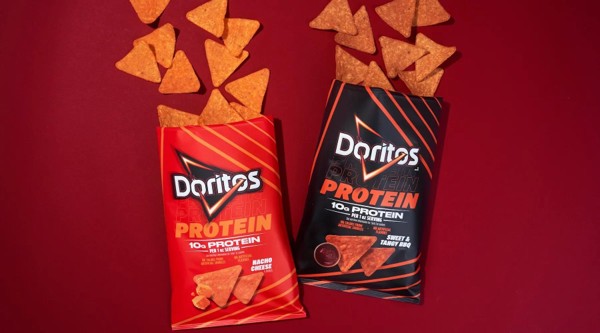
As a result, protein is potentially the biggest single food trend going into 2026. 68% of consumers now actively look for high-protein claims, up from 54% three years ago. The large players have noticed: Danone launched a protein shake aimed squarely at GLP-1 users, PepsiCo put protein into Doritos, Chipotle added a high-protein cup.

Most of what’s sold as high-protein today is ultra-processed: bars and shakes carrying the same additives and the same health baggage the category claims to help you escape. And the people who need protein most, older adults, need more of it, and better timed across the day, than the food system actually delivers; the standard guideline intake is probably too low for them. So “high protein” on the front of the pack and genuinely good protein are not yet the same product. That gap is where a credible brand gets to win.
There are several grounds we find interesting as a result. First, the infrastructure around the GLP-1 consumer: the nutrition, adherence and muscle-preservation layer that sits alongside the drug rather than competing with it; Nourish recently raised $100m at a $1.75bn valuation doing precisely this, so the proof point exists. Second, genuinely clean, whole-food protein built for absorption rather than label theatre. Third, strength aimed at the people the fitness industry should focus on more: women, the over-50s, the perimenopausal.
Naturally, the next generation of weight-loss drugs is being engineered to spare muscle. However, the deeper change, from losing weight to keeping muscle, sits on top of ageing and basic health rather than a passing fashion. Hence, this is a consumer shift that is likely to last.
GLP-1 adoption (KFF Health Tracking Poll): https://www.kff.org/health-costs/poll-1-in-8-adults-say-theyve-taken-a-glp-1-drug-including-4-in-10-of-those-with-diabetes-and-1-in-4-of-those-with-heart-disease/
Grocery spend impact (Journal of Marketing Research): https://journals.sagepub.com/doi/10.1177/00222437251412834
Food industry impact and consumer behaviour (CNBC / JPMorgan; Circana): https://www.cnbc.com/2026/03/21/glp-1-diets-restaurants-protein-fiber-weight-loss-drugs.html
Lean mass loss (STEP 1 body-composition analysis): https://pmc.ncbi.nlm.nih.gov/articles/PMC8089287/
Strength training and mortality (American Journal of Preventive Medicine): https://www.ajpmonline.org/article/S0749-3797(22)00176-3/abstract
Resistance training and bone density (J. Orthopaedic Surgery and Research): https://pmc.ncbi.nlm.nih.gov/articles/PMC12107943/
Gym behaviour (Health & Fitness Association): https://www.healthandfitness.org/how-77-million-fitness-members-work-out-new-hfa-data-reveals-shifting-equipment-training-and-membership-trends/
Protein quality and ultra-processing (Tufts Now): https://now.tufts.edu/2026/01/29/protein-bars-healthy-snack-or-ultra-processed
GLP-1 nutrition infrastructure funding (Bloomberg): https://www.bloomberg.com/news/articles/2026-05-19/nutrition-care-startup-raises-100-million-to-help-glp-1-treatment
Cargill Protein Profile Survey: https://www.cargill.com/doc/1432277049818/the-2025-protein-profile.pdf

Ready to take your sports start-up to the next level? Let's collaborate and redefine the game together.
GLP-1s are a drug class that has gone mainstream faster than almost any consumer health product in living memory. One in eight American adults is on a GLP-1 today, and nearly one in five has tried one. Use skews towards women and the over-50s, the people who also do most of the household food shopping; that alone is enough to reshape how a large chunk of a country eats. The drugs have made the hard part, taking the fat off, close to easy. The prize is quietly moving to what comes next, and what’s harder to hold onto: muscle. That shift is fuelling the strength economy.
Households with a GLP-1 user cut their grocery spending by about 5% in the six months after starting, and the cuts land hardest on the calorie-dense end of the trolley: snacks, fast food, the impulse buys. JPMorgan thinks the drugs could take $30 to $55bn out of US food and drink sales by 2030. But the spend isn’t disappearing so much as moving. The same shoppers will happily pay more for anything that reads as genuinely good for them. Demand is concentrating, not collapsing, and it’s concentrating around a small number of things: protein, fibre, and the feeling of being full.
When you lose weight on a GLP-1, a large share of what you lose is muscle. In the main semaglutide trial, roughly a third of the weight people shed was lean mass. Some of that is normal when anyone loses weight. A lot of it isn’t ideal, particularly for the older users who make up much of the prescription base and who can least afford to lose muscle. The goal is likely to shift from the smaller number on the scale to one’s body composition behind that number.
This isn’t only a drug story. We lose 3-8% of our muscle per decade after 30 anyway, and faster after 60. Women lose bone and muscle through menopause. The drugs have simply dragged a problem that was always there and handed it to millions of people at the same moment. The real addressable group is anyone over 40 who wants to stay strong, not just the people holding a prescription.
People have already worked this out. Strength training is now the single biggest reason people go to the gym; around 58% of members lift, and US facilities hit a record 77m members last year. The evidence is firmly on their side. Resistance training on its own is linked to roughly 21% lower all-cause mortality, and about 40% lower when paired with cardio, across a meta-analysis of more than 370,000 people. For post-menopausal women it measurably improves bone density. The solid science here should make for durable consumer demand.
As a result, protein is potentially the biggest single food trend going into 2026. 68% of consumers now actively look for high-protein claims, up from 54% three years ago. The large players have noticed: Danone launched a protein shake aimed squarely at GLP-1 users, PepsiCo put protein into Doritos, Chipotle added a high-protein cup.
Most of what’s sold as high-protein today is ultra-processed: bars and shakes carrying the same additives and the same health baggage the category claims to help you escape. And the people who need protein most, older adults, need more of it, and better timed across the day, than the food system actually delivers; the standard guideline intake is probably too low for them. So “high protein” on the front of the pack and genuinely good protein are not yet the same product. That gap is where a credible brand gets to win.
There are several grounds we find interesting as a result. First, the infrastructure around the GLP-1 consumer: the nutrition, adherence and muscle-preservation layer that sits alongside the drug rather than competing with it; Nourish recently raised $100m at a $1.75bn valuation doing precisely this, so the proof point exists. Second, genuinely clean, whole-food protein built for absorption rather than label theatre. Third, strength aimed at the people the fitness industry should focus on more: women, the over-50s, the perimenopausal.
Naturally, the next generation of weight-loss drugs is being engineered to spare muscle. However, the deeper change, from losing weight to keeping muscle, sits on top of ageing and basic health rather than a passing fashion. Hence, this is a consumer shift that is likely to last.
GLP-1 adoption (KFF Health Tracking Poll): https://www.kff.org/health-costs/poll-1-in-8-adults-say-theyve-taken-a-glp-1-drug-including-4-in-10-of-those-with-diabetes-and-1-in-4-of-those-with-heart-disease/
Grocery spend impact (Journal of Marketing Research): https://journals.sagepub.com/doi/10.1177/00222437251412834
Food industry impact and consumer behaviour (CNBC / JPMorgan; Circana): https://www.cnbc.com/2026/03/21/glp-1-diets-restaurants-protein-fiber-weight-loss-drugs.html
Lean mass loss (STEP 1 body-composition analysis): https://pmc.ncbi.nlm.nih.gov/articles/PMC8089287/
Strength training and mortality (American Journal of Preventive Medicine): https://www.ajpmonline.org/article/S0749-3797(22)00176-3/abstract
Resistance training and bone density (J. Orthopaedic Surgery and Research): https://pmc.ncbi.nlm.nih.gov/articles/PMC12107943/
Gym behaviour (Health & Fitness Association): https://www.healthandfitness.org/how-77-million-fitness-members-work-out-new-hfa-data-reveals-shifting-equipment-training-and-membership-trends/
Protein quality and ultra-processing (Tufts Now): https://now.tufts.edu/2026/01/29/protein-bars-healthy-snack-or-ultra-processed
GLP-1 nutrition infrastructure funding (Bloomberg): https://www.bloomberg.com/news/articles/2026-05-19/nutrition-care-startup-raises-100-million-to-help-glp-1-treatment
Cargill Protein Profile Survey: https://www.cargill.com/doc/1432277049818/the-2025-protein-profile.pdf
Accelerate Ventures
Accelerate Ventures 40-42 Hatton Garden London EC1N 8EB
