


40-42 Hatton
Garden London
EC1N 8EB

When the concept of “wellness” first began to gain traction, it was seen as a highly individual pursuit, driven by solo practices such as meditation and mindfulness. Today, we see wellness as an increasingly social, collective experience. Run clubs and group fitness classes have spiked in popularity, and this evolution is creating an attractive investment opportunity in consumer technology.
Gen Z is facing unprecedented mental health challenges. The American Psychological Association showed the majority of Americans aged 18–34 feel “completely overwhelmed” by their stress on most days, far higher than other generations.
A 2022 McKinsey report found that Gen Z reported the lowest levels of emotional and social wellbeing of all generations. The BBC reported similar conclusions.
Loneliness is also prevalent, with 74% of Gen Z feeling it is harder to build meaningful connections today than in the past, directly linked to high-volume online interactions lacking genuine, in-person connections.
This backdrop matters for investors because it signals a shift in what consumers – particularly young adults – are seeking. Platforms and experiences that combine physical wellbeing with social belonging are in high demand. Fitness is emerging as the bridge between mental wellbeing and real-world social connection. 56% of US Gen Z consumers rank fitness as a “very high priority” (versus 40% of US consumers overall).
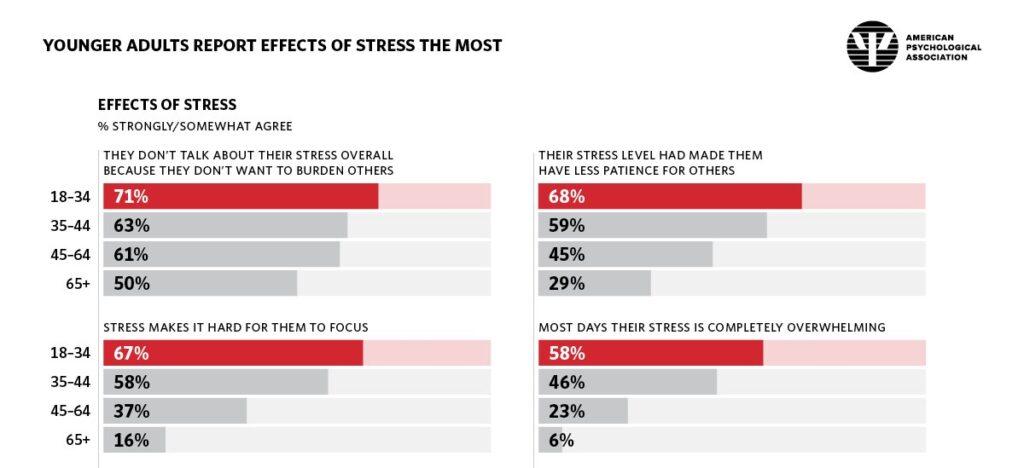
Source: 2023 American Psychological Association, Stress in America Survey
Community is rapidly becoming the primary motivator for participation. More than half of Gen Z report having formed new friendships through working out, and nearly 1 in 5 went on a date with someone they met through exercise. These numbers point to a category that is not only growing but also deeply embedded in lifestyle and identity.
Strava reports that 58% of users have made friends through fitness groups, and a staggering 81% of runners cite community as one of the biggest motivators to sign up for races.
Activity length increases by 40% when people exercise in groups of ten or more, and Gen Z is four times more likely to want to meet people through working out than at a bar. Even workout formats are adapting, with micro-movements under 20 minutes rising by more than 20%, reflecting demand for flexible, social experiences.
This trend is shown very clearly by the growth in subscription platforms to group fitness and wellness classes. One of the leaders in this space, ClassPass, reported an increase in fitness reservations of 51% and 36% in 2024 and 2025, respectively.

ClassPass is benefiting from the boom in demand for group fitness classes, particularly pilates and yoga
This convergence of health, technology and social connectivity is creating a category with strong fundamentals for venture investment. The market is not limited to traditional fitness apps, as proven by the success of the subscription segment, led by ClassPass. It also includes community-led platforms, gamified wellness experiences, hybrid digital and in-person models, and even dating layers built on shared physical activity. These models benefit from network effects, high engagement and diversified monetisation streams, including subscriptions, events, and brand partnerships.
The defensibility of these models stems from habit loops and emotional stickiness. When a product becomes the gateway to both wellbeing and social identity, churn decreases and lifetime value increases. For VCs, this kind of behaviour-driven moat translates into stronger LTV/CAC profiles than stand-alone wellness platforms.
The next generation of category leaders will be those who integrate social architecture into the core product rather than as an add-on. Investors should seek platforms that prioritise community mechanics, leverage data for personalised engagement, and build scalable ecosystems that extend beyond workouts into lifestyle.
Large consumer tech platforms have set the benchmark for personalised engagement, but their products generally do not leave users feeling healthier, happier, or more fulfilled.
In the context of growing loneliness and deteriorating mental health, start-ups that turn wellness into a shared, social experience can solve structural problems and create cultural movements. This is where outsized venture returns are most often created.

Ready to take your sports start-up to the next level? Let's collaborate and redefine the game together.
When the concept of “wellness” first began to gain traction, it was seen as a highly individual pursuit, driven by solo practices such as meditation and mindfulness. Today, we see wellness as an increasingly social, collective experience. Run clubs and group fitness classes have spiked in popularity, and this evolution is creating an attractive investment opportunity in consumer technology.
Gen Z is facing unprecedented mental health challenges. The American Psychological Association showed the majority of Americans aged 18–34 feel “completely overwhelmed” by their stress on most days, far higher than other generations.
A 2022 McKinsey report found that Gen Z reported the lowest levels of emotional and social wellbeing of all generations. The BBC reported similar conclusions.
Loneliness is also prevalent, with 74% of Gen Z feeling it is harder to build meaningful connections today than in the past, directly linked to high-volume online interactions lacking genuine, in-person connections.
This backdrop matters for investors because it signals a shift in what consumers – particularly young adults – are seeking. Platforms and experiences that combine physical wellbeing with social belonging are in high demand. Fitness is emerging as the bridge between mental wellbeing and real-world social connection. 56% of US Gen Z consumers rank fitness as a “very high priority” (versus 40% of US consumers overall).
Source: 2023 American Psychological Association, Stress in America Survey
Community is rapidly becoming the primary motivator for participation. More than half of Gen Z report having formed new friendships through working out, and nearly 1 in 5 went on a date with someone they met through exercise. These numbers point to a category that is not only growing but also deeply embedded in lifestyle and identity.
Strava reports that 58% of users have made friends through fitness groups, and a staggering 81% of runners cite community as one of the biggest motivators to sign up for races.
Activity length increases by 40% when people exercise in groups of ten or more, and Gen Z is four times more likely to want to meet people through working out than at a bar. Even workout formats are adapting, with micro-movements under 20 minutes rising by more than 20%, reflecting demand for flexible, social experiences.
This trend is shown very clearly by the growth in subscription platforms to group fitness and wellness classes. One of the leaders in this space, ClassPass, reported an increase in fitness reservations of 51% and 36% in 2024 and 2025, respectively.
ClassPass is benefiting from the boom in demand for group fitness classes, particularly pilates and yoga
This convergence of health, technology and social connectivity is creating a category with strong fundamentals for venture investment. The market is not limited to traditional fitness apps, as proven by the success of the subscription segment, led by ClassPass. It also includes community-led platforms, gamified wellness experiences, hybrid digital and in-person models, and even dating layers built on shared physical activity. These models benefit from network effects, high engagement and diversified monetisation streams, including subscriptions, events, and brand partnerships.
The defensibility of these models stems from habit loops and emotional stickiness. When a product becomes the gateway to both wellbeing and social identity, churn decreases and lifetime value increases. For VCs, this kind of behaviour-driven moat translates into stronger LTV/CAC profiles than stand-alone wellness platforms.
The next generation of category leaders will be those who integrate social architecture into the core product rather than as an add-on. Investors should seek platforms that prioritise community mechanics, leverage data for personalised engagement, and build scalable ecosystems that extend beyond workouts into lifestyle.
Large consumer tech platforms have set the benchmark for personalised engagement, but their products generally do not leave users feeling healthier, happier, or more fulfilled.
In the context of growing loneliness and deteriorating mental health, start-ups that turn wellness into a shared, social experience can solve structural problems and create cultural movements. This is where outsized venture returns are most often created.
Accelerate Ventures
Accelerate Ventures 40-42 Hatton Garden London EC1N 8EB
