


40-42 Hatton
Garden London
EC1N 8EB
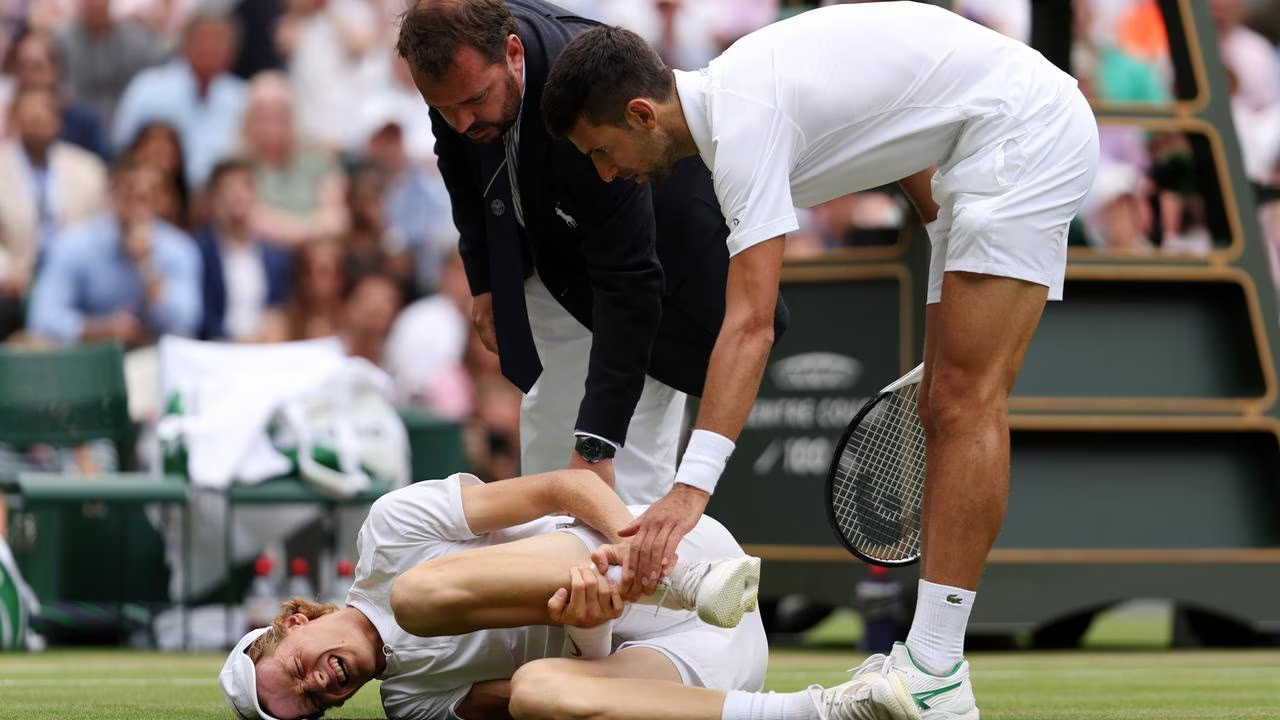
For much of modern sport, an expanding calendar has been treated as progress.
More tournaments create more matches. More matches create more broadcast inventory, which in turns widens the opportunity to sell tickets, sponsorships and media rights. On the surface, everyone seems to be a winner. However, this only works if the athletes whom the fans are paying to see are uninjured and fit to play.
This August, tennis has been confronted by this problem head-on. World Number 1 Jannik Sinner, Novak Djokovic and Carlos Alcaraz were among the leading men absent from the Canadian Open. On the women’s side, defending champion Victoria Mboko and Wimbledon finalist Karolina Muchova were also missing through injury.
The Professional Tennis Players Association found that the professional tennis calendar has become increasingly unsustainable. Injury rates are rising while recovery windows continue to shrink as tournaments expand and schedules become more congested.
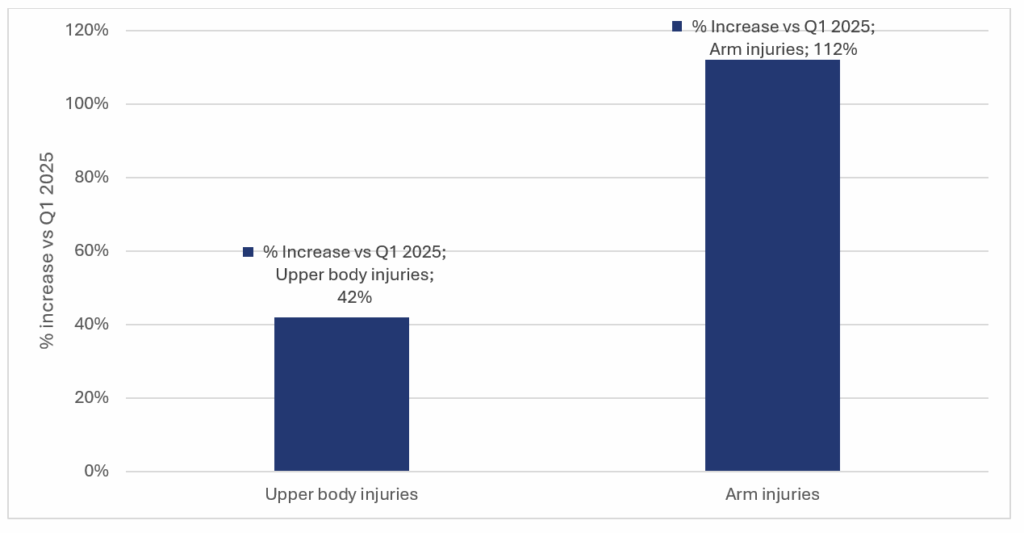
Tennis Injury Rates, Q1 2026 vs Q1 2025 Source: PTPA / Dr Robby Sikka injury analysis, 30,000+ matches (2026) https://tennisuptodate.com/tennis-news/the-data-is-clear-the-season-is-too-long-ptpa-releases-data-showcasing-concerning-injury-pattern-in-2026
Women’s World Number 1 Aryna Sabalenka has publicly criticised the WTA calendar after pulling out of Montreal having played 56 matches between January and July. Several other players have also had to cut their 2025 seasons short, citing physical and mental exhaustion. Some tours have started to respond, with the ATP cutting the number of mandatory events top players must enter and introduced a heat rule to adjust play in extreme conditions
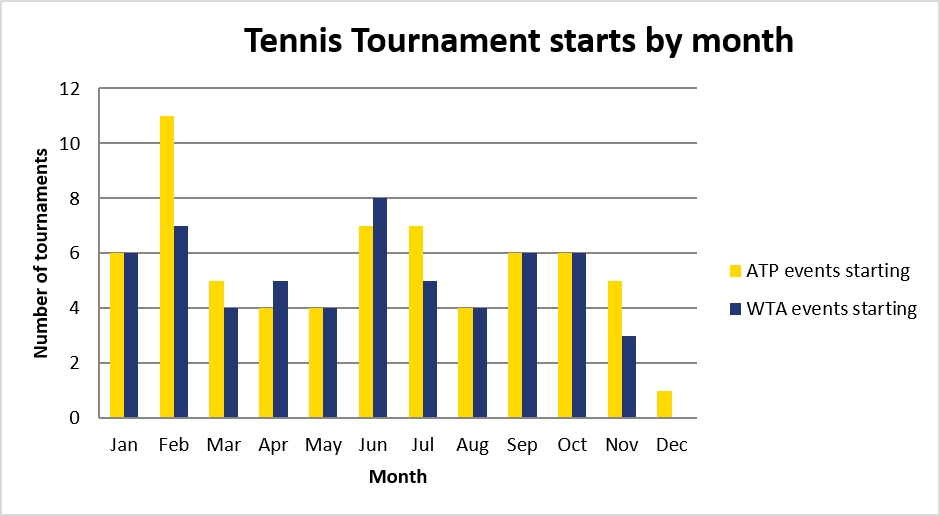
Number of tennis tournaments per year. Source: https://www.atptour.com/en/tournaments
This trend mirrors broader elite sport, where injury incidence is no longer stable but structurally increasing. In the Premier League, injury burden rose by around 11% year-on-year in 2023/24, with scheduling intensity cited as a primary driver.
While tennis remains at the centre of this issue, it is far from unique. Across other global sports, including football, cricket and rugby a commercial pursuit of more fixtures is colliding with the physical limits of the athletes upon whom that value depends.
Fans generally pay to watch their favourite athletes, not just a competition. When stars withdraw from injury, tournaments lose viewership, sponsorship value and ticket demand. The result is a paradox: more events but less commercial impact per event. Elite athletes are a scarce asset, yet governing bodies continue to increase the supply of matches featuring them. As fixture list grow, the scarcity value of top-level competition risks being diluted, reducing its premium appeal to broadcasters and sponsors.
Research into rugby union has found that both very high and very low match exposure over a season raise injury risk, while in cricket fast bowlers show that sudden spikes in workload create a delayed injury risk that lands three or four weeks later. Football faces a similar challenge. Expanded international competitions, a larger Champions League format and growing commercial demands are increasing the workload placed on the sport’s biggest stars.
Jude Bellingham missed 15 games in the 2025/2026 season due to two separate injuries. The athletes who drive the highest commercial returns are also those carrying the heaviest workload, creating a direct conflict between revenue maximisation and asset preservation.
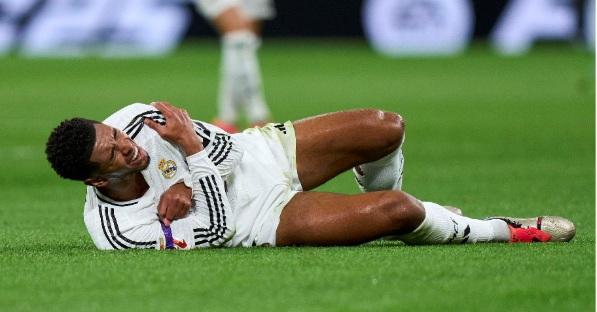
Jude Bellingham’s shoulder injury in 2025. Source: https://www.tntsports.co.uk/football/la-liga/2024-2025/jude-bellingham-shoulder-injury-real-madrid-carlo-ancelotti_sto20039689/story.shtml
The immediate financial impact is hard to quantify as little shows up as a direct medical bill. For players, injuries mean lost prize money, ranking opportunities and sponsorship viability.
Football provides the clearest example of how this is a real commercial problem.
Across Europe’s five major leagues, 4,123 injuries were recorded in 2023/24 generating an estimated €732 million in salary costs while players were unavailable. Over four seasons, total injury-related costs exceeded €2.3billion. Zooming out further, the five-year cost of injuries across Europe’s top leagues has reached approximately €3.45 billion, highlighting that this is not a short-term fluctuation but a structural financial drain on the industry. Injuries cost clubs an average of €172,975 per game, effectively reducing the value of each fixture played.
Injuries are no longer simply a player welfare issue. They are becoming a material economic risk for leagues, teams, broadcasters and tournament organisers.
The real cost of injury is not medical treatment. It is lost inventory. A withdrawn top seed means fewer marquee matchups, lower audience interest and reduced value for broadcasters and sponsors. Sport may be generating more content than ever before, but the quality of that content depends on player availability.
The challenge facing sport is no longer simply creating more events. It is protecting the athletes that make those events valuable. As global sporting calendars continue to expand, leagues and governing bodies will need to balance short-term commercial growth against the long-term sustainability of their athletes. In a world where star power drives attention, protecting player availability may become one of sport’s most important competitive advantages.
https://www.transfermarkt.co.uk/jude-bellingham/verletzungen/spieler/581678
https://www.wtatennis.com/news/4315058/sabalenka-jabeur-badosa-withdraw-from-montreal?utm_source
https://pubmed.ncbi.nlm.nih.gov/19346405
https://pmc.ncbi.nlm.nih.gov/articles/PMC5633632/?utm_source
https://www.howdengroupholdings.com/reports/2023-24-mens-european-football-injury-index?utm_
https://pubmed.ncbi.nlm.nih.gov/23851296
https://www.premierinjuries.com/article/epl-2023-24-season-injury-review-financial-impact?utm_

Ready to take your sports start-up to the next level? Let's collaborate and redefine the game together.
For much of modern sport, an expanding calendar has been treated as progress.
More tournaments create more matches. More matches create more broadcast inventory, which in turns widens the opportunity to sell tickets, sponsorships and media rights. On the surface, everyone seems to be a winner. However, this only works if the athletes whom the fans are paying to see are uninjured and fit to play.
This August, tennis has been confronted by this problem head-on. World Number 1 Jannik Sinner, Novak Djokovic and Carlos Alcaraz were among the leading men absent from the Canadian Open. On the women’s side, defending champion Victoria Mboko and Wimbledon finalist Karolina Muchova were also missing through injury.
The Professional Tennis Players Association found that the professional tennis calendar has become increasingly unsustainable. Injury rates are rising while recovery windows continue to shrink as tournaments expand and schedules become more congested.
Tennis Injury Rates, Q1 2026 vs Q1 2025 Source: PTPA / Dr Robby Sikka injury analysis, 30,000+ matches (2026) https://tennisuptodate.com/tennis-news/the-data-is-clear-the-season-is-too-long-ptpa-releases-data-showcasing-concerning-injury-pattern-in-2026
Women’s World Number 1 Aryna Sabalenka has publicly criticised the WTA calendar after pulling out of Montreal having played 56 matches between January and July. Several other players have also had to cut their 2025 seasons short, citing physical and mental exhaustion. Some tours have started to respond, with the ATP cutting the number of mandatory events top players must enter and introduced a heat rule to adjust play in extreme conditions
Number of tennis tournaments per year. Source: https://www.atptour.com/en/tournaments
This trend mirrors broader elite sport, where injury incidence is no longer stable but structurally increasing. In the Premier League, injury burden rose by around 11% year-on-year in 2023/24, with scheduling intensity cited as a primary driver.
While tennis remains at the centre of this issue, it is far from unique. Across other global sports, including football, cricket and rugby a commercial pursuit of more fixtures is colliding with the physical limits of the athletes upon whom that value depends.
Fans generally pay to watch their favourite athletes, not just a competition. When stars withdraw from injury, tournaments lose viewership, sponsorship value and ticket demand. The result is a paradox: more events but less commercial impact per event. Elite athletes are a scarce asset, yet governing bodies continue to increase the supply of matches featuring them. As fixture list grow, the scarcity value of top-level competition risks being diluted, reducing its premium appeal to broadcasters and sponsors.
Research into rugby union has found that both very high and very low match exposure over a season raise injury risk, while in cricket fast bowlers show that sudden spikes in workload create a delayed injury risk that lands three or four weeks later. Football faces a similar challenge. Expanded international competitions, a larger Champions League format and growing commercial demands are increasing the workload placed on the sport’s biggest stars.
Jude Bellingham missed 15 games in the 2025/2026 season due to two separate injuries. The athletes who drive the highest commercial returns are also those carrying the heaviest workload, creating a direct conflict between revenue maximisation and asset preservation.
Jude Bellingham’s shoulder injury in 2025. Source: https://www.tntsports.co.uk/football/la-liga/2024-2025/jude-bellingham-shoulder-injury-real-madrid-carlo-ancelotti_sto20039689/story.shtml
The immediate financial impact is hard to quantify as little shows up as a direct medical bill. For players, injuries mean lost prize money, ranking opportunities and sponsorship viability.
Football provides the clearest example of how this is a real commercial problem.
Across Europe’s five major leagues, 4,123 injuries were recorded in 2023/24 generating an estimated €732 million in salary costs while players were unavailable. Over four seasons, total injury-related costs exceeded €2.3billion. Zooming out further, the five-year cost of injuries across Europe’s top leagues has reached approximately €3.45 billion, highlighting that this is not a short-term fluctuation but a structural financial drain on the industry. Injuries cost clubs an average of €172,975 per game, effectively reducing the value of each fixture played.
Injuries are no longer simply a player welfare issue. They are becoming a material economic risk for leagues, teams, broadcasters and tournament organisers.
The real cost of injury is not medical treatment. It is lost inventory. A withdrawn top seed means fewer marquee matchups, lower audience interest and reduced value for broadcasters and sponsors. Sport may be generating more content than ever before, but the quality of that content depends on player availability.
The challenge facing sport is no longer simply creating more events. It is protecting the athletes that make those events valuable. As global sporting calendars continue to expand, leagues and governing bodies will need to balance short-term commercial growth against the long-term sustainability of their athletes. In a world where star power drives attention, protecting player availability may become one of sport’s most important competitive advantages.
https://www.transfermarkt.co.uk/jude-bellingham/verletzungen/spieler/581678
https://www.wtatennis.com/news/4315058/sabalenka-jabeur-badosa-withdraw-from-montreal?utm_source
https://pubmed.ncbi.nlm.nih.gov/19346405
https://pmc.ncbi.nlm.nih.gov/articles/PMC5633632/?utm_source
https://www.howdengroupholdings.com/reports/2023-24-mens-european-football-injury-index?utm_
https://pubmed.ncbi.nlm.nih.gov/23851296
https://www.premierinjuries.com/article/epl-2023-24-season-injury-review-financial-impact?utm_
Accelerate Ventures
Accelerate Ventures 40-42 Hatton Garden London EC1N 8EB
